Mold Remediation in Snellville, GA
In the humid South, mold follows water fast. The local crews contain the area, remove the mold, and verify the result, then fix the moisture source so it does not come back.
(470) 934-2396Tap to reach 24/7 dispatch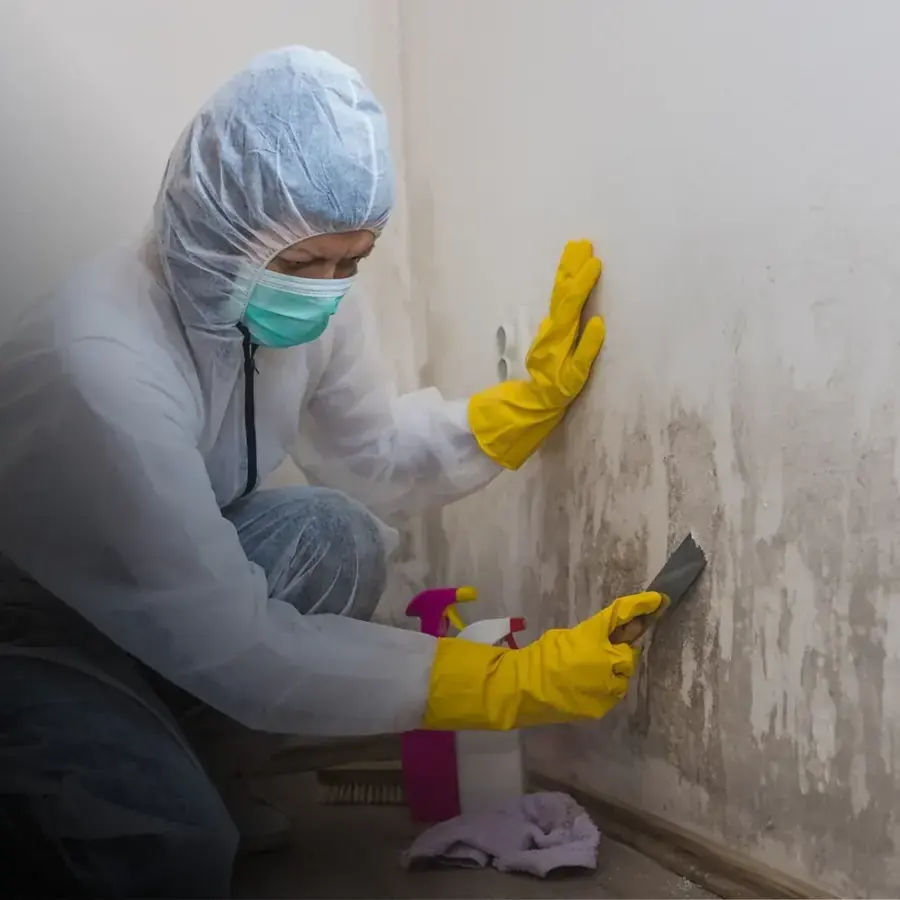
Mold is almost always the aftermath of a water problem that sat too long, and in Snellville that can be a matter of a day or two. The humid subtropical climate means a slow leak, a wet crawl space, or a flood that was only surface-dried grows mold in 24 to 48 hours. Local crews treat mold as a moisture problem first, so the local restoration pros do not just scrub what is visible, the Snellville water damage pros find why it grew and correct it, or it simply returns.
How the crew handles mold remediation in Snellville
Call and dispatch
A real person answers 24/7 and the nearest Snellville crew rolls with pumps, air movers, and moisture meters.
On-site assessment
The tech who does the walkthrough finds the source and the full reach of the water, including what soaked into subfloor, wall cavities, and the crawl space.
Extract and dry
The extraction crew pulls the standing water first, then air movers and commercial dehumidifiers run to a verified dry standard, not just the surface.
Verify and document
The drying team logs moisture readings until the structure is dry, then documents the loss for your insurance claim.
Why mold spreads fast in Gwinnett homes
The conditions mold needs are the same conditions a Georgia summer provides for months at a time.
- High indoor humidity feeding growth on drywall, framing, and fabrics
- Wet crawl spaces and basements that stay damp long after a storm
- AC condensate leaks and slow plumbing leaks hidden behind finishes
- Water losses that were surface-dried but never dried inside the wall
The drying crews follow the EPA guidance on mold remediation, and the CDC guidance on mold explains the health reasons for containing and removing it properly rather than disturbing it.
The mold remediation process
Safe remediation is about containing the spores so they do not spread, removing what is affected, and confirming the air and surfaces are clean.
- Set containment and negative air so spores do not spread while restoration crews work
- Remove mold-affected porous materials and clean salvageable surfaces
- Run HEPA air scrubbers and treat with professional antimicrobials
- Dry the area to a verified reading and correct the moisture source behind it
Because mold is a moisture problem, remediation usually pairs with structural drying and, when the source is under the house, the crawl space crew.
Seeing or smelling mold after a leak? Call and the extraction crews contain it, remove it, and fix the moisture behind it before it spreads further through the home.
☎ Call (470) 934-2396Health, honesty, and prevention
Local crews are straight with you about scope. Mold is the aftermath, never something the local restoration pros invent or oversell. Once it is removed and the moisture is corrected, keeping indoor humidity down, fixing leaks quickly, and drying any water loss properly is what keeps it from returning. When the moisture came from a covered event, the Snellville water damage pros document the loss and keep the claim file complete.
What a real Gwinnett County dry-out involves
Rapid local response
Whoever answers the Snellville line dispatches the nearest crew the moment you call, day or night, across Gwinnett County.
IICRC S500 drying standard
Crews dry to the IICRC S500 standard, structural drying, not just surface, verified with meters and thermal imaging instead of a mop and a fan.
Claim-ready documentation
The crew records photos and daily moisture readings for your insurance claim, so the file is ready when you file it.
Local water experts
Summer storms, red-clay seepage, humidity and mold, AC condensate, and basements: local crews know how water moves in Gwinnett.
From Snellville across Gwinnett County
Along the US-78 and GA-124 corridor, the local crews respond county-wide, day or night.
From Snellville, the local crews cover all of south and central Gwinnett County, day or night.
Coverage runs across Snellville, Grayson, Loganville, Lawrenceville, Lilburn, Stone Mountain, Lithonia, Centerville, Norcross, and Dacula.
See every neighborhood and ZIP covered ›Related restoration services
Snellville water damage questions, answered
How fast can mold grow after water damage?
In Georgia humidity, mold can begin growing on wet materials within 24 to 48 hours. That is why the drying crews dry water losses to a verified standard quickly, before mold has a chance to establish.
Can I just clean mold with bleach?
Surface cleaning can remove what you see but not what has grown into porous materials or behind finishes, and it does nothing about the moisture feeding it. Proper remediation contains the area, removes affected materials, and corrects the source.
Is mold in my home a health risk?
It can be, especially for people with allergies, asthma, or weakened immune systems. That is why restoration crews contain and remove it with proper equipment and protective gear rather than disturbing it and spreading spores.
Why does mold keep coming back?
Because the moisture source was never fixed. Mold is a moisture problem, so if a leak, a wet crawl space, or high humidity remains, it returns. The extraction crews correct the source as part of the job.
Do you fix the leak that caused the mold?
Local crews identify and address the moisture source, coordinate any needed plumbing repair, and dry the area, so remediation solves the actual problem rather than treating the symptom.
Will insurance cover mold remediation?
When the mold results from a sudden covered water loss that was reported promptly, it is often covered. Long-term, neglected leaks may not be. The local restoration pros document the cause and keep the claim file complete.
A local Snellville crew is standing by
Water sitting means damage spreading. Call Pro Water Damage Snellville and a local crew heads out across Gwinnett County, day or night.
(470) 934-2396Call now, a local crew picks up day or night